Cable Systems
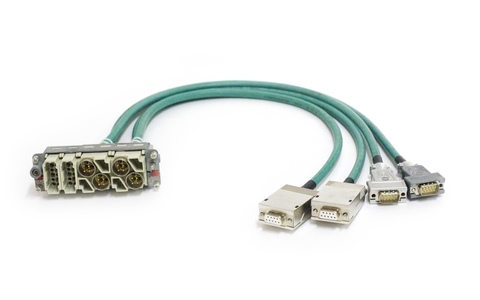
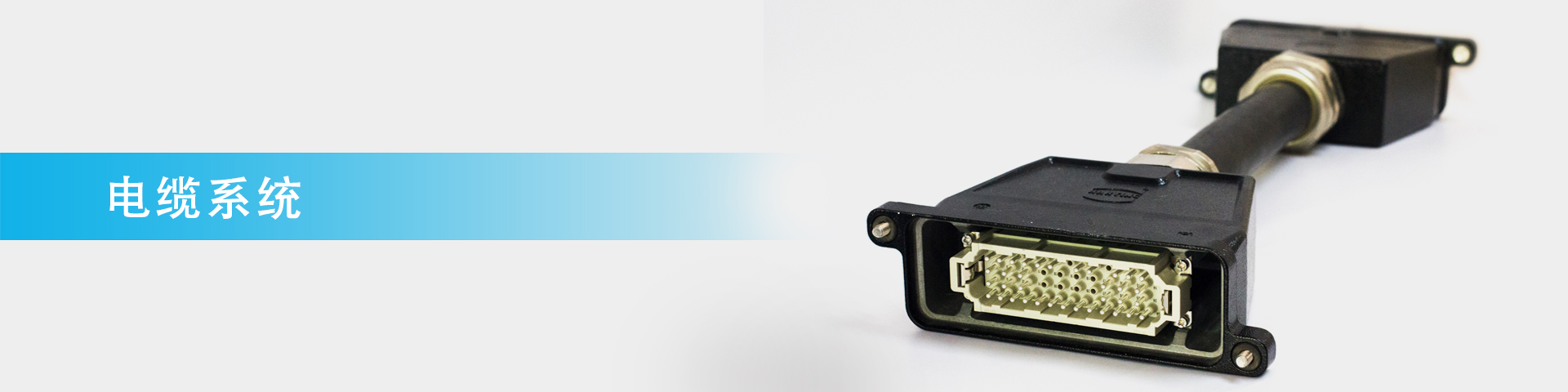
A cable system, or cable harness, also known as a wire harness, cable assembly or wiring assembly, is an assembly of cables or wires that transmit signals or power. The cables are bound together by durable materials, for example a combination of rubber, plastic, electrical tape, conduit and extruded string braiding.
Cable harnesses are commonly used in rolling stock, automobiles and construction machinery, and offer several advantages over loose wires and cables. For example, many rolling stock vehicles, aircraft, cars and spacecraft contain a great number of wires which, if fully unrolled, would extend for several kilometres. By binding many wires and cables into a single cable harness, the wires and cables can be secured better and protected from the adverse effects of vibration, abrasion and moisture. By compressing the wires into a non-flexing bundle, the space used is optimised and the risk of a short circuit is reduced. Since the installer only has to fit one harness (instead of many individual wires), installation time is reduced and the process can easily be standardised. Binding the wires in a flame-retardant sleeve also reduces the risk of an electrical fire.
Cable harnesses are usually designed according to geometrical and electrical requirements. Diagrams for assembly preparation and assembly are then provided (on paper or on a monitor).
First the wires are cut to the required length, usually with a special wire cutting machine. The wires can also be printed during the cutting process by a special machine or on a separate machine. After this, the wire ends are stripped to expose the metal (or core) of the wire, which is then fitted with terminals or connector housings. The cables are assembled and clamped together on a special workbench or on a pin board (assembly board) according to the design specification, forming the cable harness. After sleeves, conduits or extruded yarn have been fitted, the harness can be installed directly in the vehicle or shipped.
Although the level of automation continues to increase, manual manufacturing is still the main method of cable harness production in general, because many different steps are involved, for example:
- threading wires through sleeves,
- wrapping with fabric tape, especially at branches of the wire strands,
- crimping terminals onto wires, especially so-called multiple crimping (several wires in one terminal),
- inserting one sleeve into another,
- securing the strands with tape, clips or cable ties.
These steps are hard to automate, and major suppliers still use manual production, automating only part of the process. Manual production is still more cost-effective than automation, especially for small production runs.
Pre-production can be partly automated. This affects:
- cutting individual wires (cutting machines),
- stripping wires (automatic stripping machines),
- crimping terminals onto one or both ends of the wire,
- inserting pre-terminated wire sections into connector housings (modules),
- soldering wire ends (soldering machines),
- twisting wires.
Harnesses must also be manufactured together with terminals, a terminal being defined as “a device designed to terminate a conductor that is to be affixed to a post, stud, chassis, another tongue, etc., in order to establish an electrical connection”. Some terminal types include ring, tongue (spade), spade, flag, hook, blade, quick-connect, offset and marker types.
After production, cable harnesses are usually subjected to various tests to ensure their quality and function. Test boards can be used to measure the electrical performance of a harness. This is done by entering data about the circuits in which one or more cable harnesses will be used and programming this into the test board. The function of the harness in the simulated circuit is then measured.
Another common cable harness test method is the “pull test”, in which the harness is connected to a machine that pulls the harness at a constant rate. This test measures the strength and conductivity of the cable harness to ensure that it remains effective and safe.
Over the past 15 years, MB Connectivity has been recognised as one of the most important suppliers of rolling stock cables in China. Thanks to our bold move to diversify into the field of cable accessories, MB Connectivity China can today provide our customers with complete and reliable cable system solutions.