High-Speed Rail
Introduction
High-speed rail is a type of rail transport that runs significantly faster than traditional rail traffic, using an integrated system of specialised rolling stock and dedicated tracks. While there is no single standard that applies worldwide, lines built for speeds in excess of 250 km/h (155 mph) and upgraded lines in excess of 200 km/h (124 mph) are widely considered to be high-speed rail.
Many countries have built or are building high-speed rail infrastructure linking major cities, including Austria, Belgium, China, Denmark, Finland, France, Germany, India, Indonesia, Iran, Italy, Japan, Laos, Morocco, the Netherlands, Norway, Poland, Portugal, Russia, Saudi Arabia, Serbia, South Korea, Spain, Sweden, Switzerland, Taiwan, Turkey, the United Kingdom, the United States and Uzbekistan. Only in Europe and Asia does high-speed rail cross national borders.
The main high-speed rail platforms in China are as follows:
Fuxing
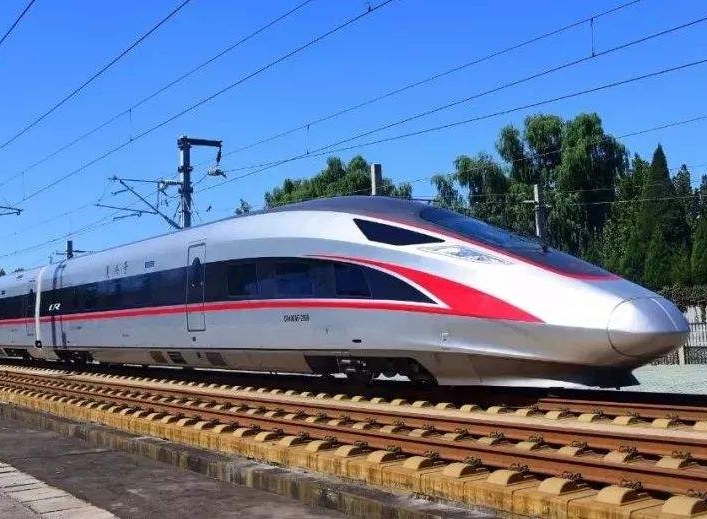
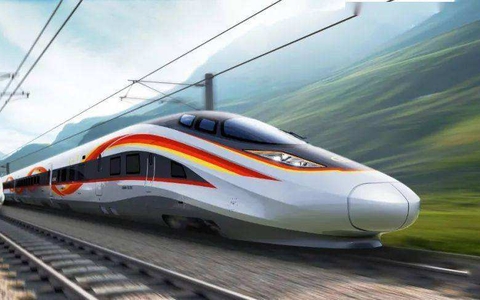
The Fuxing (also known as the CR series EMU) is a high-speed EMU train with independent intellectual property rights, operated by China Railway High-speed (CRH) and developed by CRRC. Known as the China Standardised EMU, the project began development in 2012 and the design was completed in September 2014. The first EMU rolled off the production line on 30 June 2015 and was officially named “Fuxing” in June 2017; some models are nicknamed the “blue/red dolphin” (CR400AF) and the “golden phoenix” (CR400BF). It is the fastest conventional high-speed train in the world, with the CR400AF and CR400BF models operating at 350 km/h (220 mph).
Hexie
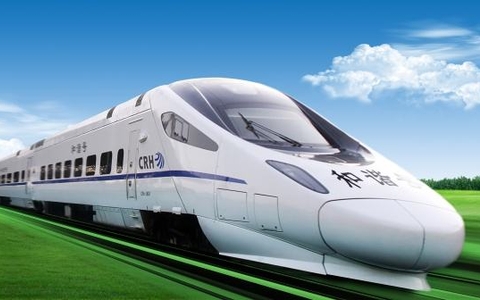
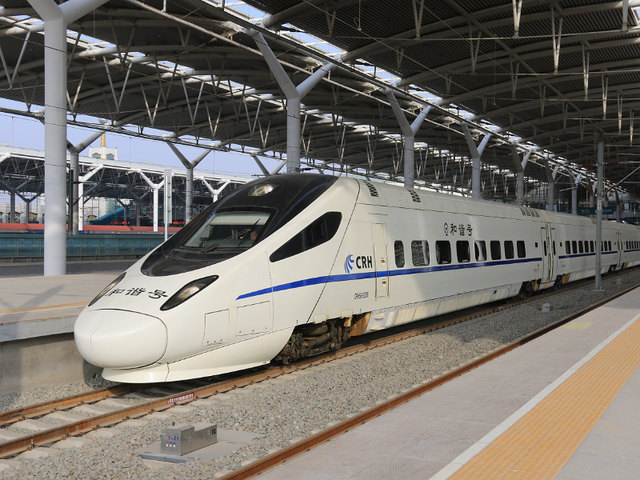
The Hexie (also known as the CRH series EMU) is the high-speed rail service operated by China Railway. The sixth Chinese railway speed-up was implemented on 18 April 2007, and the introduction of the CRH series was an important part of it. It is the most widely used railway service in the world.
More than 1,000 train sets operate under the CRH brand, including the Hexie CRH1/2A/5 with a design top speed of 250 km/h (160 mph) and the CRH2C/3 with a top speed of 350 km/h (220 mph). The independently designed CRH380A reached a maximum test speed of 416.6 km/h (258.9 mph) and operates commercially at 350 km/h. The fastest train, the CRH380BL, reached a maximum test speed of 487.3 km/h (302.8 mph). According to speed there are three classes of high-speed train, G, D and C (G and some C services run at up to 350 km/h, D services at 250 km/h and C services at 200 km/h).
As of 31 December 2021, China had built more than 40,000 km of high-speed railway in operation. A huge fleet of 4,153 train sets (standardised EMU train sets, 33,221 cars) runs on this, the largest commercially operated high-speed railway network. Since 2007, the high-performance rolling stock cables of MB Connectivity have been installed on the main high-speed train platforms, from the Hexie to the Fuxing. Over the past 15 years, our renowned cables have provided reliable service for the daily travel of the Chinese people all over the country.