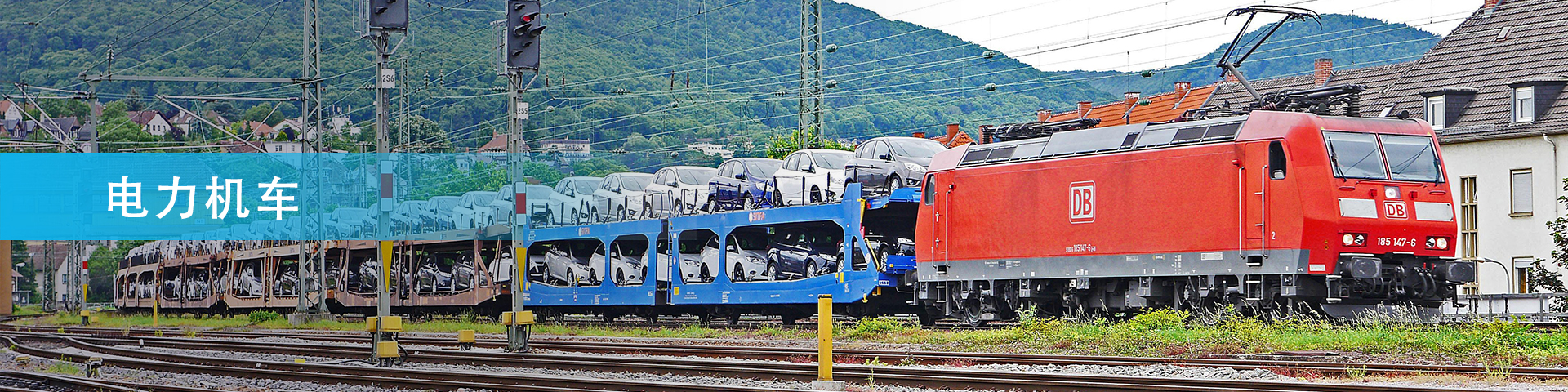
Electric Locomotives
Introduction
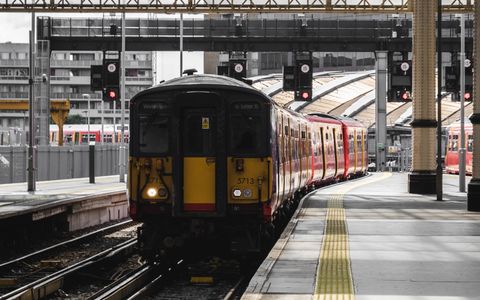
An electric locomotive is a locomotive powered exclusively by electricity. Power is supplied to moving trains via a continuous conductor running along the track, usually in one of three forms: an overhead line suspended from poles or towers along the track or from structures or tunnel ceilings; a third rail mounted at track level; or an on-board battery. Overhead line and third rail systems usually use the running rails as the return conductor, but some systems use a separate fourth rail for this purpose. The type of electricity used is either direct current (DC) or alternating current (AC).
There are several methods of current collection: the trolley pole, a long flexible pole that engages the line with a wheel or shoe; the bow collector, a frame that holds a long collecting rod against the wire; the pantograph, a hinged frame that holds the collector shoes against the wire in a fixed geometry; and the contact shoe, which contacts the third rail. Of the three, the pantograph method is best suited to high-speed operation.
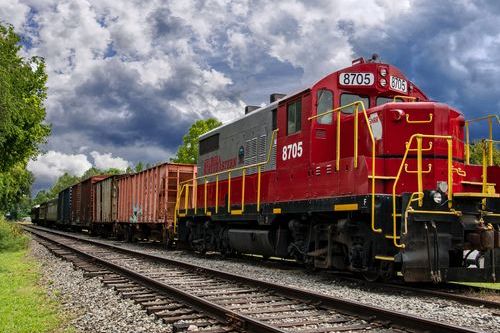
Electric locomotives commonly use axle-hung traction motors, with one motor for each powered axle. In this arrangement, one side of the motor housing is supported by a sliding bearing mounted on a machined journal that is integral with the axle. The other side of the housing has a tongue-shaped projection that engages a matching slot in the bolster (truck) support, its purpose being to act as a torque reaction device as well as a support. Power transmission from the motor to the axle is by means of spur gearing, in which a pinion on the motor shaft engages a larger gear on the axle. Both gears are enclosed in a liquid-tight housing containing lubricating oil. The type of service in which the locomotive is used determines the gear ratio employed. Numerically high ratios are commonly found on freight units, whereas numerically low ratios are typical of passenger engines.
Electricity is usually generated in large and relatively efficient generating stations, transmitted to the railway network and distributed to the trains. Some electric railways have their own dedicated generating stations and transmission lines, but most purchase power from an electric utility. The railway usually provides its own distribution lines, switches and transformers. Electric locomotives usually cost about 20 percent less than diesel locomotives, their maintenance costs are 25-35 percent lower and their running costs can be as much as 50 percent lower.
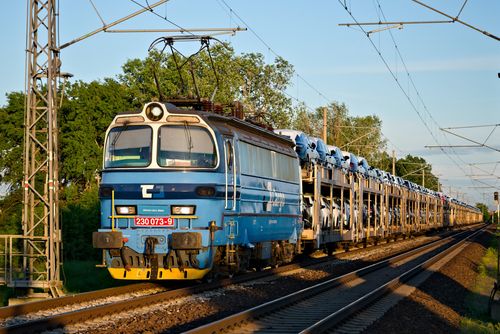
Locomotives have three main uses in railway operations: hauling passenger trains, hauling freight trains and shunting.
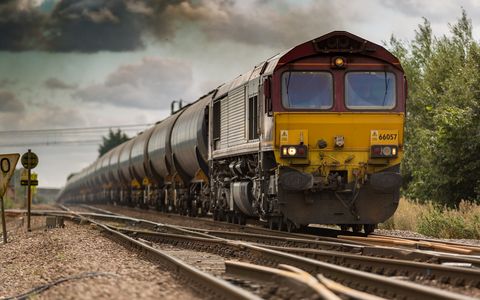
Freight locomotives are normally designed to deliver high starting tractive effort and high sustained power. This allows them to start and move long, heavy trains, but usually at the cost of a relatively low maximum speed. Passenger locomotives usually develop lower starting tractive effort but are able to operate at the high speeds required to maintain passenger schedules. Mixed-traffic locomotives, used for both passenger and freight trains, do not develop as much starting tractive effort as freight locomotives, but are able to haul heavier trains than passenger engines.
In diesel-electric and electric locomotives, the control system between the traction motors and the axles adapts the power output to the rails for freight or passenger service. Passenger locomotives may include other features, such as head-end power (also known as hotel power or electric train supply) or steam generators.
Some locomotives are designed specifically to work on steep gradient railways, and have extensive additional braking mechanisms and sometimes rack rails and pinions. Steam locomotives built for steep rack railways frequently had the boiler tilted relative to the locomotive frame, so that the boiler remained roughly level on steep gradients.
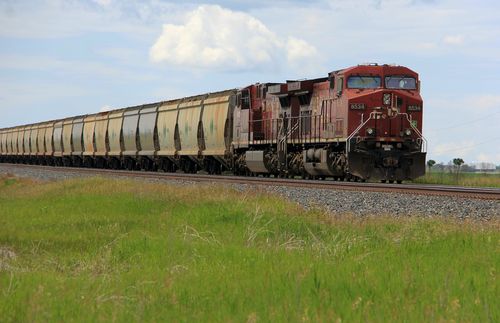
Some high-speed trains also use locomotives: all TGVs, many AVEs, some Korean high-speed trains and the now-retired ICE 1 and ICE 2 trains all use locomotives, which can also be called power cars. Using power cars makes it easy to achieve high ride quality and requires less electrical equipment, but compared with electric multiple units they entail lower acceleration and higher axle loads (for the power car). The KTX-Sancheon and ICE 1 use a combination of electric multiple units and power cars.
As of 31 December 2021, a total of 21,700 locomotives of all types had been manufactured in China, including 13,900 electric locomotives. These electric locomotives play a very important role in rail freight transport and complement the world-leading high-speed railway network in passenger transport.