Urban Rail Transit
Introduction
Urban rail transit is an all-encompassing term for the various types of local rail transport systems providing passenger service within and around urban or suburban areas. The collection of urban rail systems can be roughly subdivided into the following categories, which sometimes overlap because some systems or lines have mixed characteristics.
Metro
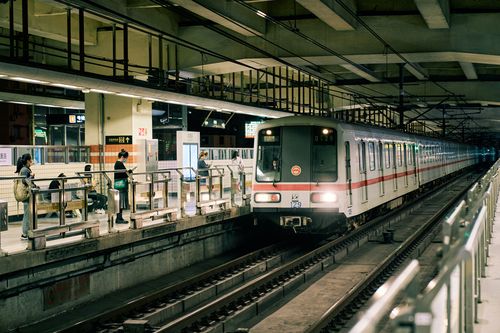
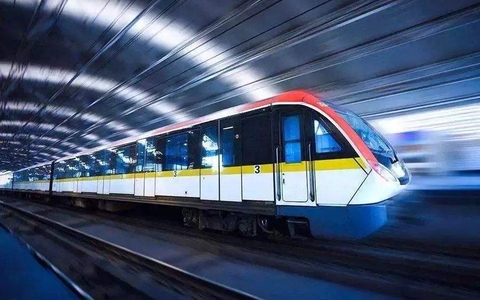
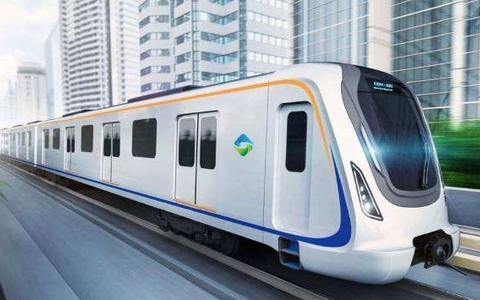
A rapid transit or metro system is a railway - usually in an urban area - with a high passenger capacity and frequency of service, and (generally) total separation from other traffic, including other rail traffic. It is often referred to as “heavy rail” to distinguish it from light rail and bus rapid transit.
In most of the world these systems are known as “metro”, short for “metropolitan”. The term “subway” is mostly used for systems in the United States, as well as Glasgow and Toronto. In London the system is named “the Underground” and is often nicknamed “the Tube”. In Germany the system is called the “U-Bahn”, standing for “Untergrundbahn” (underground railway). In East, South-East and South Asia, for example in Taipei, Chennai and Singapore, they are all known as “MRT”, i.e. “mass rapid transit”. In Chicago, Bangkok and Vancouver they are mostly called “the L” or “SkyTrain”. Other less common names are “T-bane” (in Scandinavia) and “MTR”.
Light rail
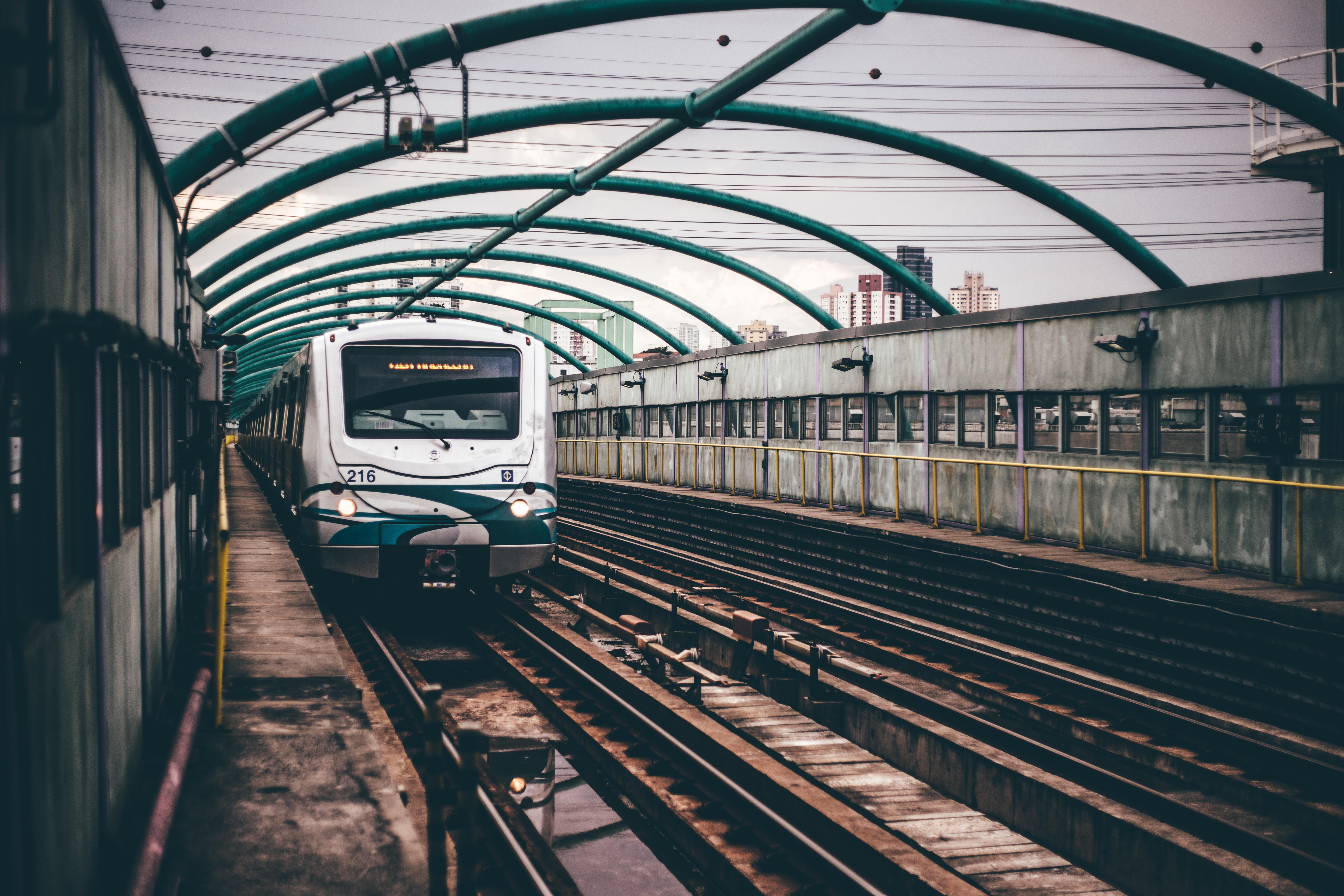
A light rail system is a rail-based transport system with a higher passenger capacity and speed than a tramway, usually separated from car traffic with its own right of way, but - unlike a metro - not completely separated from other traffic. Light rail also usually operates with multiple-unit trains rather than single tram cars. It emerged as an evolution of the tramway. Light rail systems vary greatly in speed and capacity. They range from systems that are only slightly upgraded tramways to systems that are essentially metros with some level crossings.
Tram
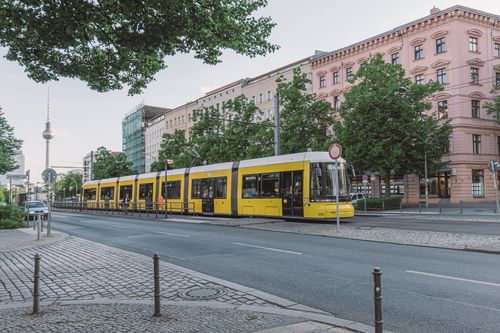
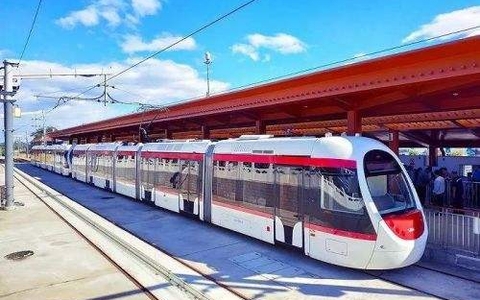
A tramway, streetcar or trolley system is a rail-based transport system that runs mainly or entirely along streets (i.e. in street running), with relatively low passenger capacity and frequent stops. Passengers usually board from the street or kerbside, although low-floor trams may allow ground-level boarding. Longer-distance lines are known as interurban or radial railways. Today only a few interurban railways remain; most have been upgraded to commuter rail or light rail, and the rest have been abandoned.
The term “tram” is used in most of the world. In North America these systems are called “streetcar” or “trolley” systems; in Germany such a system is called a “Straßenbahn”, literally “street tram” or “tramway”. Modernised tram systems have a higher passenger capacity than traditional trams.
Intercity trains
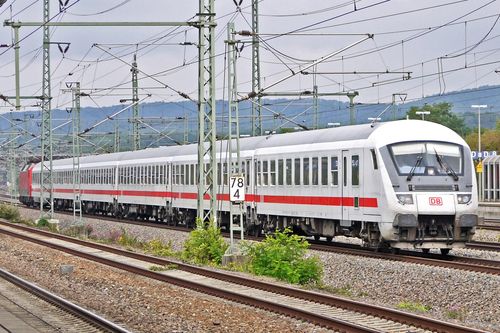
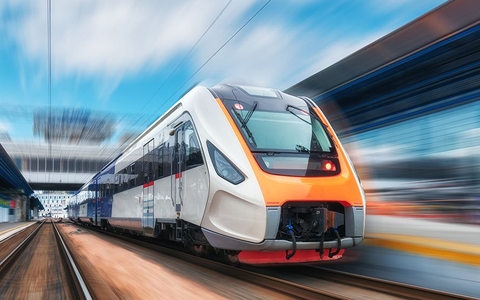
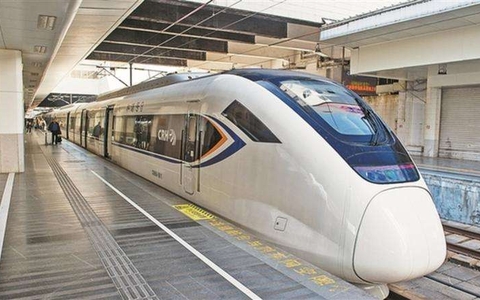
Commuter rail, regional rail or suburban rail systems operate on main line tracks that may be shared with intercity and freight trains. Compared with metro or light rail systems, these systems tend to operate at lower frequencies but at higher speeds, with greater distances between stations and longer total distances. The passenger capacity of each train is high.
Although many European and East Asian commuter rail systems have frequencies and rolling stock similar to those of a metro, they do not qualify as such because they share tracks with intercity/freight trains or have level crossings. For example, the S-train is a hybrid system combining features of metro and commuter rail systems. Usually S-trains share tracks with main line passenger and freight trains, but the distances between stations and the service intervals are similar to those of a metro system.
Automated guideway transit
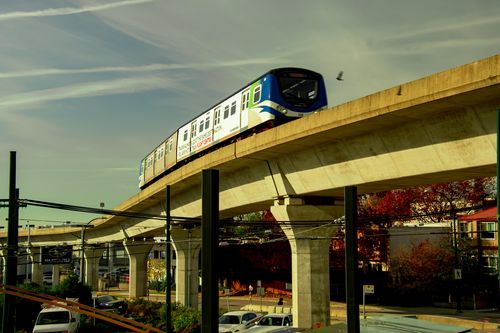
An automated guideway transit (AGT) system is a light transport infrastructure with a guideway or straddled surface that supports and physically guides one or more driverless vehicles along its length. These vehicles are usually rubber-tyred or steel-wheeled, but other traction systems, including air cushions and magnetic levitation, are also used. The guideway usually provides both physical support, like a road, and guidance. In the case of fixed-route systems the two are usually the same, just as a railway line provides both support and guidance for a train. For systems with multiple routes, most AGT systems use smaller wheels with conventional steering gear on the guideway to guide the vehicle, like those on a car.
As of 31 December 2021, the total operating length of urban rail transit in China had reached 8,108 km, with 5,126 stations covering 269 lines in 51 cities. Since 2007, the high-performance rolling stock cables of MB Connectivity have been installed on numerous projects in more than 30 cities across the country, covering all vehicle platforms of metro, light rail, tram, intercity train and automated guideway transit systems.